













Modern Product Development: Why Many Manufacturers Still Face Product Launch Delays
In today’s manufacturing environment, product development is no longer an isolated task handled solely by the design department. An effective process requires seamless integration of design (CAD), simulation (CAE), manufacturing (CAM), and product data management (PLM) within a unified data flow. This connected approach enables companies to shorten time-to-market, reduce development costs, and enh
A modern product development process is an integrated approach that connects every stage of product development—from design (CAD), engineering simulation (CAE), and manufacturing preparation (CAM) to product data management (PLM)—on a single platform. By integrating these stages, manufacturers can shorten time-to-market, reduce development errors, and improve collaboration across departments. The goal of a modern product development process is to help companies develop products faster, minimize engineering change costs, improve product quality, and enhance collaboration throughout the entire product lifecycle.
Why Do Many Manufacturers Still Struggle to Launch Products on Time?
Investing in advanced engineering software does not automatically result in faster product development.
Many manufacturers have already adopted CAD, CAE, or CAM solutions, yet projects continue to experience delays due to repeated design revisions, rising development costs, or inconsistent product data across departments.
In many cases, the root cause is not the engineering team's capability, but the fact that each department is working with different versions of product data.
For example, the design team may have already updated the latest CAD model, while the manufacturing team continues using an older revision to prepare CNC machining programs. Even a small design change that is not synchronized can lead to mold modifications, prototype rework, or production delays.
This is why more manufacturers are shifting from optimizing individual engineering functions to building an integrated product development process, where data flows seamlessly from concept through production.
This approach is known as Integrated Product Development (IPD), in which design, simulation, manufacturing, and product data management teams collaborate using a shared source of product data. By working from a single, consistent data environment, companies can reduce errors, improve collaboration, and accelerate product development.
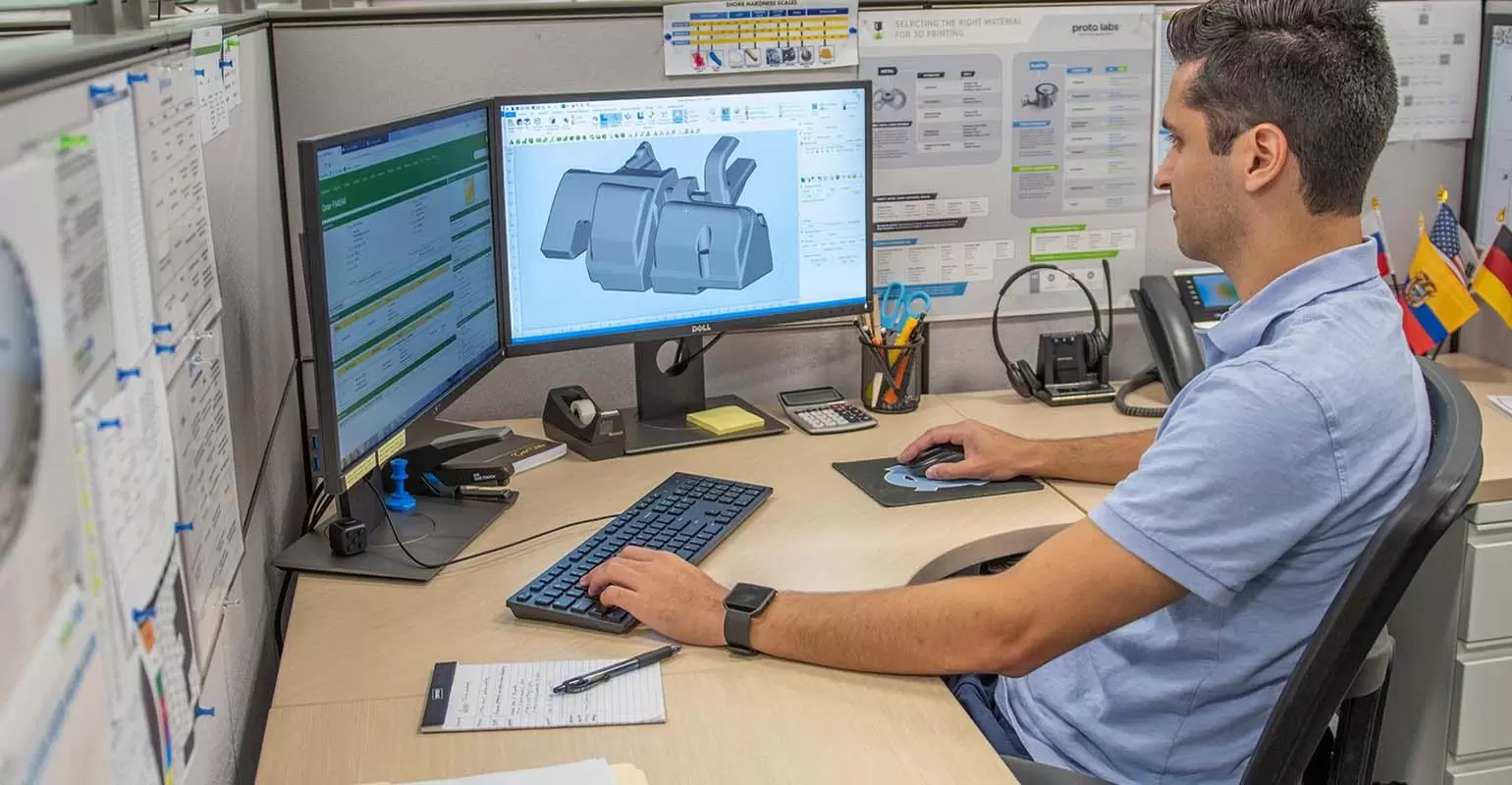
Product engineers designing with CAD software.
How Does the Modern Product Development Process Work?
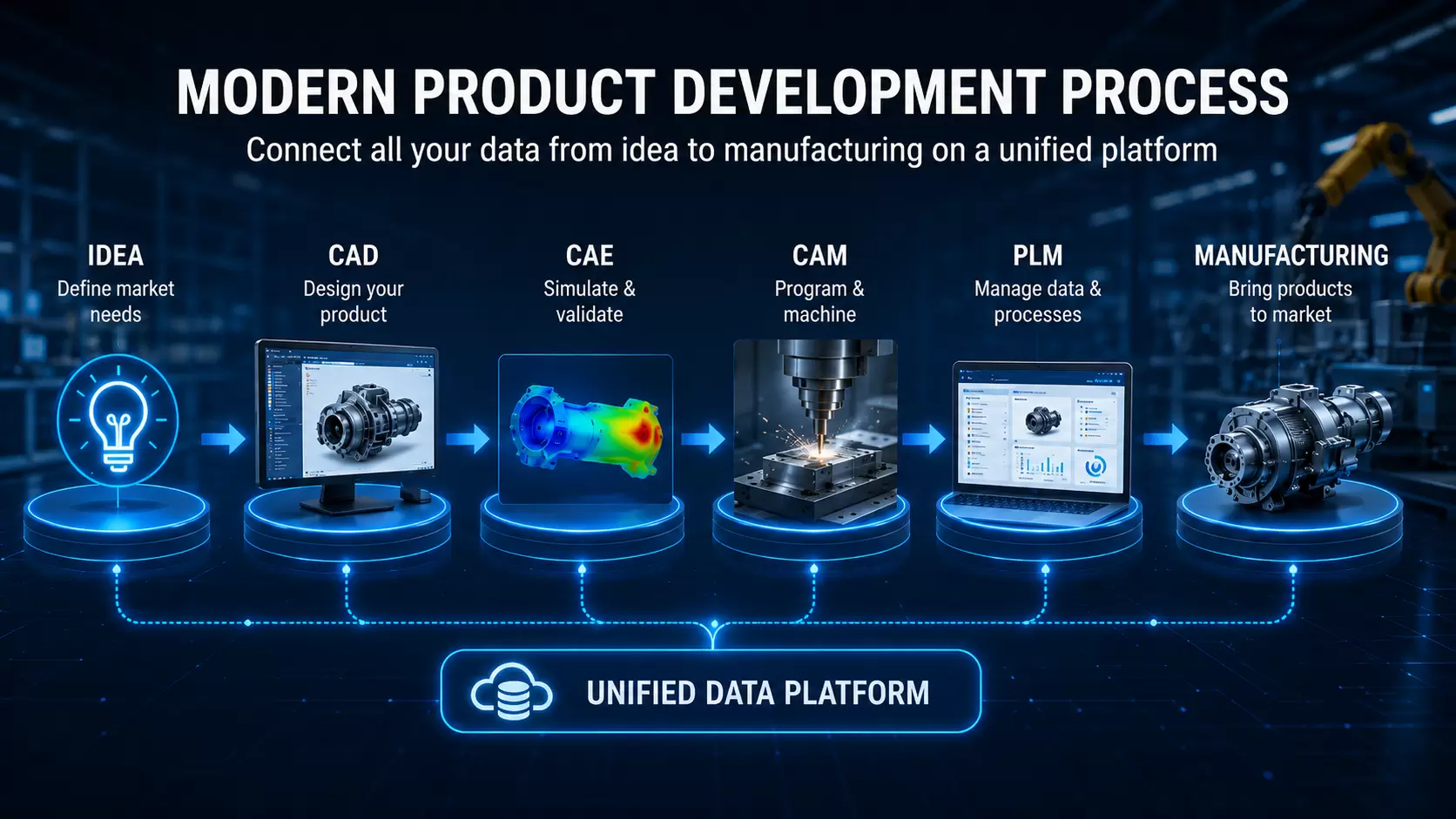
In a modern product development process, each technology serves a distinct purpose while working from the same source of product data:
- CAD – Creates 3D models and engineering drawings.
- CAE – Simulates and validates product performance.
- CAM – Prepares and optimizes manufacturing processes.
- PLM – Manages product data and connects the entire development process.
Instead of transferring data between multiple software systems or relying on manual handoffs, every department works on a unified platform. Any design change is automatically synchronized across the product development process, reducing errors, improving collaboration, and accelerating product development.
Single Source of Truth (SSOT) is a data management principle in which all teams work from one authoritative version of product data. By ensuring that design, simulation, manufacturing, and product management teams access the same information, SSOT minimizes data inconsistencies, prevents errors caused by outdated design revisions, and improves collaboration throughout the entire product development process.
What Are the Key Stages of the Product Development Process?
A modern product development process typically consists of four core stages, from product design to product data management. The key to success is not how well each stage is performed individually, but how effectively they are connected through a unified digital platform.
1. Product Design with CAD
After defining the product requirements, engineers use CAD (Computer-Aided Design) to create 3D models and engineering drawings.
CAD represents the starting point of the product development process. It generates the product design data that serves as the foundation for simulation, manufacturing preparation, and product data management. Any design modification made in CAD is carried forward to subsequent stages, ensuring consistency throughout the entire development process.
Beyond 3D modeling, modern CAD solutions also support product structure management, engineering change control, and collaboration among multidisciplinary design teams.
Once the product design is completed, the next step is to validate its performance through engineering simulation using CAE.
Related articles: Beginner’s Guide to CAD | Comparison of CAD Software | Practical Applications of CAD
2. Design Validation with CAE
Instead of identifying design issues after building physical prototypes, manufacturers can use CAE (Computer-Aided Engineering) to simulate real-world operating conditions in a virtual environment.
CAE is the design validation stage of the product development process. It enables engineering teams to evaluate product performance, identify potential issues early, and optimize designs before manufacturing begins. This approach reduces the number of physical prototypes, shortens testing cycles, and minimizes costly engineering changes.
By validating designs early, companies can improve product quality while significantly reducing development costs.
Once the design has been validated, the product data is transferred to CAM for manufacturing preparation.
Related articles: Unlocking CAE | CAE in Engineering Design | CAE in Digital Engineering
3. Manufacturing Preparation with CAM
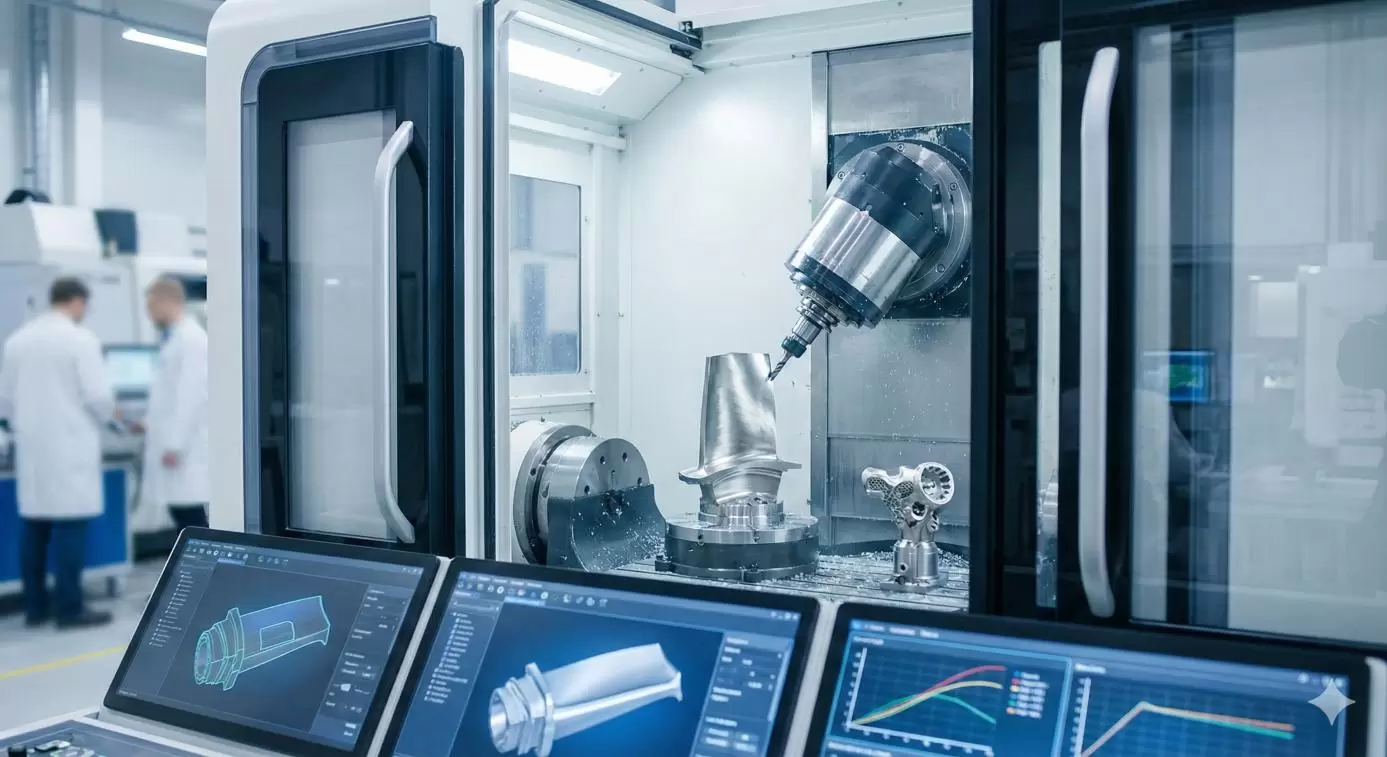
After the product design has been validated, engineering data is transferred directly to CAM (Computer-Aided Manufacturing) for CNC programming and manufacturing process optimization.
CAM is the stage where engineering design data is transformed into manufacturing data. By connecting CAD and CAM on a unified platform, manufacturers can reduce data transfer errors, shorten production preparation time, and improve machining quality.
Using the same source of product data throughout the process minimizes inconsistencies between engineering and manufacturing while reducing handoff time. This contributes to a shorter overall product development cycle and faster Time-to-Market (TTM).
Once manufacturing preparation is complete, the product data continues to be managed and synchronized throughout its lifecycle using PLM.
Related article: What is CAM? | CAM Software for High-Precision Manufacturing | 3 Enhancements in CAM-TOOL V21.1
4. Product Data Management with PLM
As the number of products, engineering drawings, and technical documents continues to grow, effective data management becomes essential to the success of the entire product development process.
PLM (Product Lifecycle Management) represents the product data management and collaboration stage of the development process. It enables manufacturers to control design revisions, manage approval workflows, and ensure that every department works from a single, consistent source of product data.
By connecting data generated in CAD, CAE, and CAM, PLM creates a seamless digital workflow that spans product design, engineering validation, manufacturing preparation, and lifecycle management.
Related articles: Introduction to PLM | Which PLM software is right for you? A comparison of today’s most popular solutions
Benefits of Connecting CAD, CAE, CAM, and PLM
When product data is connected throughout the entire development process, manufacturers do more than optimize individual engineering activities—they improve the performance of the entire product development lifecycle.
Key benefits include:
- Shorter time-to-market.
- Lower prototyping and engineering change costs.
- Better collaboration across design, engineering, and manufacturing teams.
- More effective control of product data and design revisions.
- A strong digital foundation for implementing Virtual Twin technology and accelerating manufacturing digital transformation.
This is why many manufacturers are adopting integrated platforms such as the 3DEXPERIENCE Platform to manage the entire product development process through a single source of product data. With connected data, companies can reduce Time-to-Market (TTM)—the time required to bring a product from concept to market—while creating the foundation for Virtual Twin, enabling products to be simulated, validated, and continuously optimized throughout their lifecycle.
Conclusion
In today's increasingly competitive manufacturing landscape, the speed of product development has become a critical competitive advantage.
Connecting CAD, CAE, CAM, and PLM not only reduces errors and shortens time-to-market but also establishes a unified data environment across the entire product lifecycle. This integrated approach provides the foundation for advanced product development methodologies such as Virtual Twin, empowering manufacturers to accelerate innovation, improve collaboration, and strengthen long-term competitiveness.

Is Your Business Ready to Optimize Its Product Development Process?
Many manufacturers have already invested in design, simulation, and manufacturing technologies but still struggle to synchronize product data across departments. Choosing the right digital platform and implementation strategy is essential to maximizing the value of these technologies and building a more efficient product development process.
With more than 20 years of experience and as a Gold Partner of Dassault Systèmes in Vietnam, New System Vietnam helps manufacturers implement CATIA, SIMULIA, ENOVIA, and the 3DEXPERIENCE Platform to build an integrated product development process that accelerates innovation and improves engineering collaboration.
👉 Contact the experts at New System Vietnam to discover the right solution for your business.
Frequently Asked Questions (FAQ)
1. What is a modern product development process?
A modern product development process is an integrated approach that connects product design (CAD), engineering simulation (CAE), manufacturing preparation (CAM), and product lifecycle management (PLM) on a single digital platform. This approach enables manufacturers to shorten development cycles, reduce engineering errors, and improve collaboration across departments.
2. What are the main stages of a modern product development process?
A typical modern product development process consists of four key stages: product design with CAD, design validation with CAE, manufacturing preparation with CAM, and product data management with PLM before products move into production.
3. Why should manufacturers connect CAD, CAE, CAM, and PLM?
Integrating CAD, CAE, CAM, and PLM creates a continuous digital workflow that synchronizes product data across departments. This reduces engineering errors, improves collaboration, streamlines design-to-manufacturing handoffs, and shortens Time-to-Market (TTM).
4. What is a Single Source of Truth (SSOT)?
Single Source of Truth (SSOT) is a data management principle in which all departments work from one authoritative version of product data. This ensures data consistency, minimizes errors caused by outdated revisions, and improves collaboration throughout the product development process.
5. How does a modern product development process differ from a traditional one?
Traditional product development typically relies on separate systems and disconnected data across engineering, manufacturing, and product management teams. In contrast, a modern product development process connects design, simulation, manufacturing, and product data management on a unified platform, enabling seamless collaboration, fewer errors, and faster product development.
Related posts
AI in R&D: What Should Companies Prepare for Effective Implementation?

Can AI Replace Design Engineers? The Future of AI in Engineering
How to Shorten Product Development Time: 5 Critical Factors Companies Often Overlook
CAM-TOOL V21.1: How to Reduce NC Programming Time and Optimize Toolpaths?