








Blog

AI Is Smart, But It's Not Enough: Why Virtual Twin Is Becoming the Foundation of Industrial AI

03/06/2026

Discover why Virtual Twin is becoming the foundation of Industrial AI. Learn how connected data, simulation, and AI help manufacturers make smarter decisions and accelerate innovation.

Table of Contents
Table of Contents

Artificial Intelligence (AI) is transforming the way businesses operate. From product design and production optimization to demand forecasting, AI is creating new opportunities for manufacturers to improve efficiency and strengthen their competitive advantage.
However, as organizations begin implementing AI in real-world operations, many discover that AI does not always deliver the right answers.

An AI system may generate new design concepts in minutes or analyze millions of data points far faster than humans. But are those recommendations truly feasible within existing manufacturing conditions?

This is why more industrial companies are exploring the combination of AI and Virtual Twin technology—a key foundation for the next generation of Industrial AI.


1. AI Can Generate Answers, But It Doesn't Always Understand Your Business

Most AI systems operate based on the data they are trained on. They learn from large volumes of information, historical records, and models to generate predictions and recommendations.

However, every business has unique operational requirements.

A design change may reduce material costs while simultaneously increasing manufacturing complexity. A solution that appears optimal for engineering may not align with production constraints or supply chain requirements.

The challenge is that AI often lacks visibility into the full business context, including:

  • Manufacturing process constraints
  • Product-specific engineering requirements
  • Material, cost, or scheduling limitations

This is why AI needs more than data. It needs context to understand products, processes, and business objectives before it can support effective decision-making.


2. The More Fragmented the Data, the Less Value AI Can Deliver

In many manufacturing organizations, data is scattered across multiple systems.

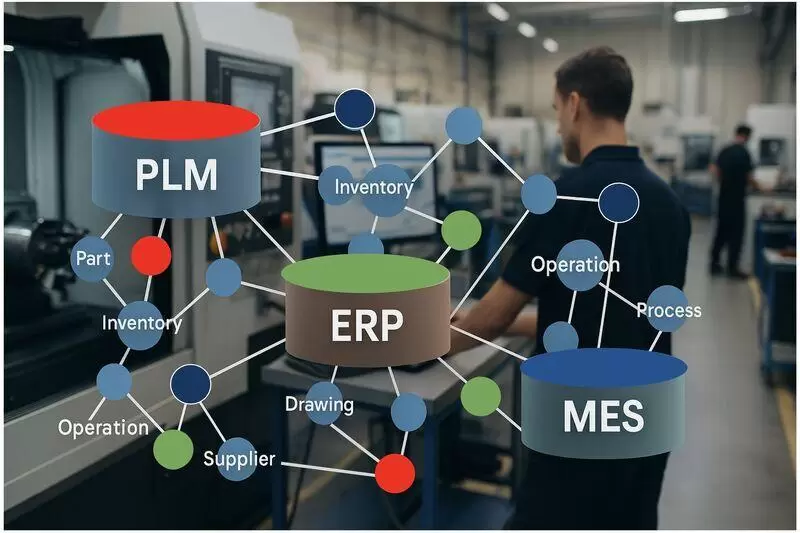
Design teams work with CAD software, product data is managed through PLM systems, production information resides in MES platforms, while operational and financial data is stored in ERP systems.

Although each system serves a critical purpose, fragmented data prevents AI from seeing the complete picture.

As a result:

  • AI recommendations may lack context.
  • The impact of decisions across the entire product lifecycle can be difficult to assess.
  • Cost, quality, and schedule optimization often occur in isolation.

In reality, the challenge is not a lack of data—it is the lack of connectivity between data sources.

When information from design, simulation, manufacturing, and operations is connected, organizations can build a much stronger foundation for AI-driven decision-making.

Learn More: Introduction to PLM: From Design and Manufacturing to Engineering Data Management

AI is only as effective as the data it can access


3. Virtual Twin Helps AI Understand the Real World

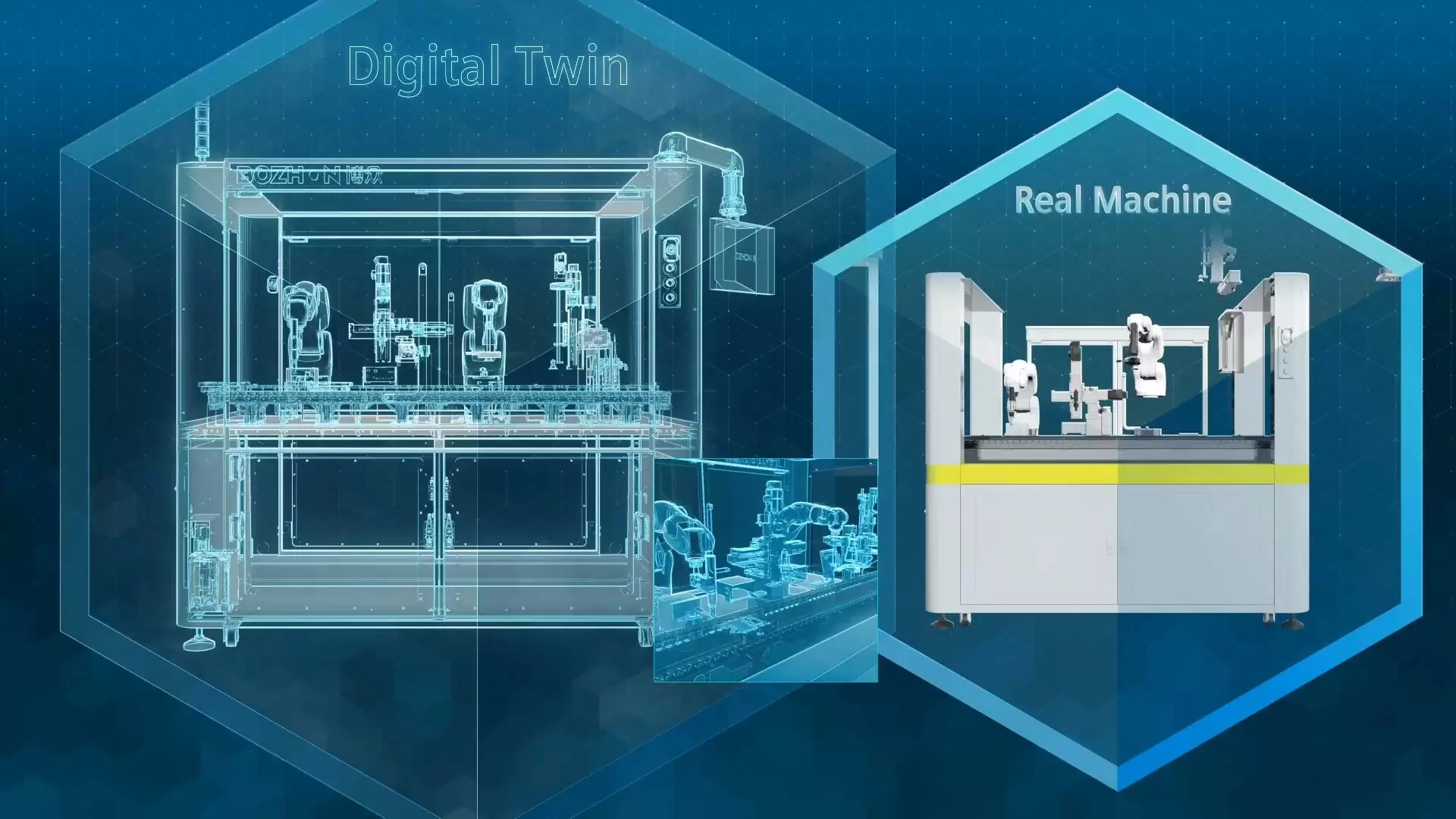
If AI is the brain that analyzes information, Virtual Twin is the environment that helps AI understand real-world conditions.

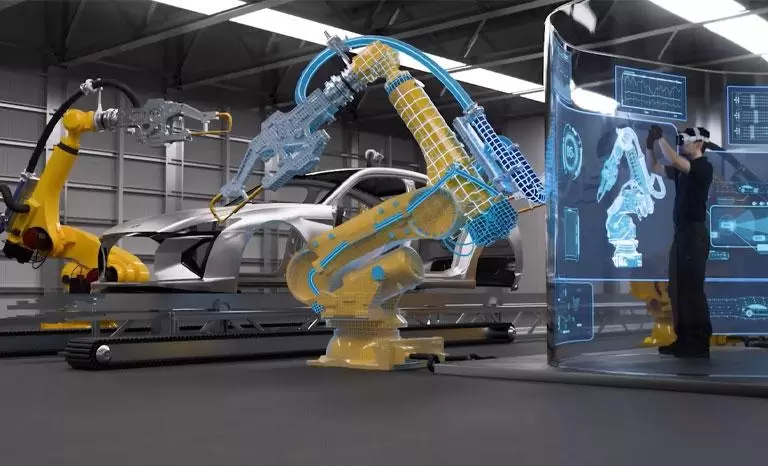
A Virtual Twin is a virtual representation of a product, process, or manufacturing facility. More than a visual model, it can simulate how a system behaves under different operating conditions.

This allows organizations to evaluate critical questions before making decisions:

  • What happens if a design change is implemented?
  • Can the current production line support higher output?
  • Will a new material reduce costs while maintaining quality standards?

When combined with AI, Virtual Twin provides a safe environment to validate recommendations before implementation.

Instead of building multiple prototypes or conducting extensive physical testing, manufacturers can evaluate scenarios in a virtual environment and identify the most effective solution.

Key Benefits of Virtual Twin

  • Accelerates product development
  • Reduces physical prototyping and testing
  • Minimizes decision-making risks
  • Improves collaboration across teams
Validate decisions before implementation.


AI Factory: The Next Step in Manufacturing Digital Transformation

The convergence of AI, data, and Virtual Twin technology is creating a new operating model known as the AI Factory.

In this model, AI is no longer used as an isolated tool. Instead, it is connected to the organization's data, knowledge, and processes across the entire product lifecycle.

From product design and engineering simulation to manufacturing and operations, decisions can be supported by AI and validated through virtual environments.

An AI Factory can be viewed as the combination of:

  • Connected enterprise data
  • AI-powered analysis and recommendations
  • Virtual Twin-based validation before execution

This approach enables organizations to shorten development cycles, reduce physical testing, and improve decision quality.


How Can Businesses Prepare for the Industrial AI Era?

AI is opening new opportunities for manufacturers. However, creating real business value requires more than advanced algorithms or powerful language models.

Organizations need an environment where data, processes, and people are connected throughout the product lifecycle.

This is why leading manufacturers around the world are investing in Virtual Twin technology and the 3DEXPERIENCE platform as part of their Industrial AI strategy.


Looking to Combine AI, Virtual Twin, and 3DEXPERIENCE?

New System Vietnam helps manufacturers build connected data environments, optimize product development processes, and unlock the full potential of Dassault Systèmes solutions.

Whether your organization is exploring AI, Virtual Twin, PLM, or digital transformation initiatives, our team is ready to support your journey toward smarter and more efficient manufacturing.

 
Share:

Related posts

19/05/2026

Technology Updates & Trends: How CAD Is Evolving in the Age of AI and Cloud

CAD is no longer just a 3D design tool. Discover how emerging trends such as AI, cloud, an...

18/03/2026

3DEXPERIENCE Customization: Tailoring the System to Fit Your Business Processes

Customize 3DEXPERIENCE to fit your business processes with NSV’s 3DEXPERIENCE Customizatio...

20/01/2026

Understanding CAD in Enterprises: From Design to Data and Manufacturing

In many engineering organizations, CAD is still viewed primarily as a drafting tool used e...

07/01/2026

Practical Applications of CAD in Modern Industrial Design and Manufacturing

Learn what CAD is and explore its practical applications in design, manufacturing, and dig...

08/10/2025

The new version of the integrated 3D CAD/CAM system, CADmeister 2024

UEL Corporation (UEL) has officially introduced the new version of its integrated 3D CAD/C...

Address Room 101, Technology Center, Thang Long Industrial Park, Thien Loc Commune, Hanoi City, Vietnam

Hotline Tel: +84 243 881 3189 / 90 Hotline: 097 240 3744

Google map Google map

Address 4th Floor, Yoco Building, 41 Nguyen Thi Minh Khai, Saigon Ward, Ho Chi Minh City, Vietnam

Hotline Tel: +84 283 926 0104 / 05

Google map Google map

Address Room 103, Executive Building - Japan Industrial Park – Hai Phong, Hai Phong City, Vietnam.

Hotline Tel: + 84 225 358 7969

Google map Google map

SIGN UP FOR NEWS