










Can AI Replace Design Engineers? The Future of AI in Engineering
Can AI replace design engineers? Discover how AI is changing engineering, the role of AURA, LEO and MARIE, and how R&D teams can prepare for AI-assisted Engineering.
AI is no longer limited to writing content, generating images, or answering questions. It is beginning to design, analyze, simulate, and become more deeply involved in the work engineers do.
A single design requirement can be turned into multiple concepts. Large volumes of engineering data can be analyzed faster. Tasks that once required extensive manual work can increasingly be supported by AI.
Dassault Systèmes is even bringing AI-powered Virtual Companions such as AURA, LEO, and MARIE to the 3DEXPERIENCE Platform, addressing different contexts across business knowledge, engineering, and science.
So the question no longer feels so far-fetched:
As AI becomes better at understanding engineering and taking on more tasks, could it eventually replace design engineers?
For now, the answer is no. AI can take over certain tasks, but it cannot replace an engineer’s role in understanding the problem, evaluating constraints, and making engineering decisions.
What is changing much faster is how engineers design and develop products.
1. How Is AI Changing the Work of Design Engineers?
Engineering design rarely ends with the first concept. Engineers typically go through repeated cycles of design – validation – modification – simulation – optimization before arriving at the right solution.
This is exactly where AI can make a difference.
Rather than replacing engineers and creating a complete product on its own, AI can support tasks that involve large amounts of data, multiple design alternatives, or repetitive processes, such as:
- Design exploration: generating or suggesting multiple concepts based on requirements and constraints.
- Design optimization: helping identify solutions that balance weight, strength, performance, and other engineering objectives.
- Automation: reducing repetitive tasks throughout the engineering process.
- Data utilization: finding and reusing data and knowledge from previous projects.
- Design validation: working alongside CAE simulation to evaluate concepts before physical prototypes are produced.
Consider a simple example: an engineer needs to reduce the weight of a component while maintaining its required strength.
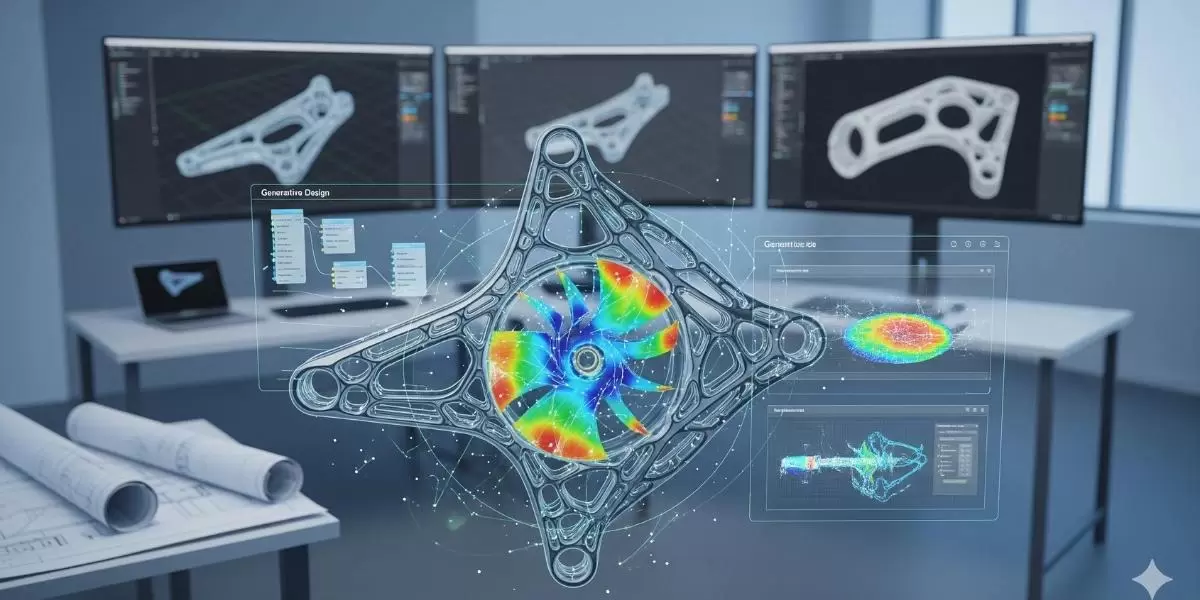
Traditionally, the engineer might create a design, run a simulation, review the results, make adjustments, and repeat the process. With AI, Generative Design, and simulation integrated into the workflow, more alternatives can be explored and filtered much faster.
Engineers do not disappear from the process. Instead, they gain the ability to explore more possibilities before making a decision.
And this highlights one of AI’s most important limitations:
AI can help identify a solution. But a mathematically optimized solution is not necessarily the best solution in the real world.
2. Why Can’t AI Replace Engineers Yet?
A product is never defined by its geometry or a single engineering metric alone.
A lighter design may be more difficult to manufacture. A material with better properties may increase costs significantly. Even a small design change can affect assembly, the BOM, manufacturing processes, or future maintenance.
That means engineers must evaluate the problem from multiple perspectives:
| AI can support | Engineers still need to decide |
|---|---|
| Analyze large volumes of data | What problem actually needs to be solved |
| Explore multiple alternatives | Requirements and constraints |
| Automate repetitive tasks | Whether a solution is feasible |
| Support optimization | How to balance performance, cost, and quality |
| Recommend results | The final engineering decision |
This is the difference between creating a design and taking responsibility for an engineering decision.
AI also depends on the data and requirements provided by humans. If the initial constraints are inappropriate, the data lacks context, or the optimization objective is poorly defined, even a convincing AI-generated result may solve the wrong problem.
AI may therefore take over an increasing number of tasks, but engineering still requires people to understand “why,” evaluate “whether it should be done,” and decide “which solution is actually the right one.”
AI has not replaced engineering thinking. But the way AI participates in engineering is changing rapidly.
3. AURA, LEO and MARIE: When AI Moves Deeper into Real Engineering Work
One sign of this shift is that AI is no longer limited to being a chatbot outside engineering tools.
Dassault Systèmes is developing Virtual Companions on the 3DEXPERIENCE Platform to support users within specific professional contexts.
Three notable Virtual Companions include:
- AURA – The Business Expert: focused on business knowledge, context, and enterprise know-how.
- LEO – The Engineer: focused on engineering, from design to manufacturing-related activities.
- MARIE – The Scientist: focused on scientific knowledge and advanced scientific challenges.
What matters here is not simply that there are three AI companions with three different roles.
They point toward a broader shift:
Industrial AI is moving from “answering questions” toward “understanding the context of work.”
Engineering requires design data. Science requires scientific knowledge. Businesses have knowledge and experience accumulated across countless projects.
When AI can access the right context, its role can extend beyond that of a general-purpose assistant and become part of the working environment itself.
But this creates another important challenge:
The more AI needs to understand context, the more important the quality of the underlying data becomes.

4. What Do Companies Need to Prepare for Engineers to Work with AI?
When discussing AI, it is easy to start by looking for a new tool. But in R&D and engineering, AI can only create meaningful value when it is supported by the right data, the right processes, and the right problem to solve.
Before asking “Which AI should we use?”, companies should consider three areas.
Is Engineering Data Really Ready?
A company may already have thousands of:
3D Models – Drawings – BOMs – Simulations – Specifications – Change Histories
But if engineers still need to search through multiple folders for the latest revision, check Excel files to verify a BOM, or dig through emails to determine whether a change has been approved, that data is not yet easy to leverage.
This is where PLM – Product Lifecycle Management and solutions such as ENOVIA become increasingly important. When data, revisions, product structures, and engineering changes are managed systematically, companies have a stronger foundation for more advanced AI applications.
If these challenges sound familiar, companies can first review the 7 signs that it may be time to consider PLM before moving to the next stage.
Are Engineering Tools Still Working in Silos?
Better data creates more value when design, simulation, and product management activities are connected.
Within the Dassault Systèmes ecosystem:
- CATIA supports product design and development.
- SIMULIA supports simulation and validation.
- ENOVIA supports data and process management.
- The 3DEXPERIENCE Platform provides an environment that connects these activities.
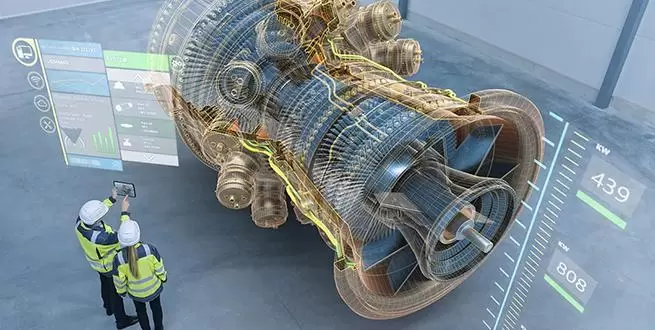
Combined with Virtual Twin and AI, engineers can move toward a workflow in which more alternatives are explored – simulated – evaluated digitally before being implemented physically.
What Problem Does the Business Want AI to Solve?
AI should not be implemented simply because it is a trend.
The objective should be much more specific:
- Reduce design time?
- Reduce the number of physical prototypes?
- Minimize rework?
- Reuse engineering knowledge more effectively?
- Shorten time-to-market?
Once data – tools – objectives are clear, companies can better determine whether the next step should be optimizing CAD, connecting simulation, implementing PLM, developing a Virtual Twin, or moving toward AI-assisted Engineering.
5. What Will Give Engineers an Advantage in the AI Era?
As AI becomes capable of performing more tasks, the engineer’s role does not necessarily become smaller. However, the value of individual skills may change.
Software proficiency will remain important. But as AI supports more technical operations, an engineer’s competitive advantage will increasingly shift toward the ability to:
- Understand the real problem, rather than simply execute a request.
- Define the right requirements and constraints for a design.
- Evaluate AI and simulation results rather than accepting them by default.
- Understand the relationship between design – simulation – manufacturing.
- Make decisions based on data and engineering experience.
In other words, engineers may gradually spend less time performing individual operations and more time defining – evaluating – deciding.
AI may reduce the value of certain repetitive tasks, but it increases the value of engineering thinking.
The advantage of the future, therefore, may belong to neither AI nor engineers alone.
It may belong to engineers who know how to work with AI.
AI Will Not Replace Engineers — But It Will Change How They Work
So, can AI ultimately replace design engineers?
At present, AI can take on an increasing number of tasks throughout product design and development. But it still relies on people to define the problem, establish constraints, evaluate trade-offs, and take responsibility for the final engineering decision.
The emergence of AURA, LEO, and MARIE also points toward a new direction for industrial AI: moving deeper into business knowledge, engineering, and science, rather than remaining simply a question-and-answer tool.
For R&D and manufacturing companies, therefore, the question should not only be:
“Can AI replace our engineers?”
But also:
“Are our current R&D data, tools, and processes ready for engineers to work with AI?”
New System Vietnam supports companies in building digital product development environments with CATIA, SIMULIA, ENOVIA, and the 3DEXPERIENCE Platform — connecting design, simulation, and data management with Virtual Twin and emerging applications of AI in engineering.
👉 Contact New System Vietnam to assess your current R&D environment and identify the right development roadmap — from CAD, CAE, and PLM to 3DEXPERIENCE and AI-assisted Engineering.
Frequently Asked Questions
1. Can AI completely replace design engineers?
Not at present. AI can automate and support many tasks, but engineers are still needed to define problems, requirements, and constraints, assess feasibility, and make engineering decisions.
2. How is AI used in engineering design?
AI can support design generation and exploration, optimization, data analysis, task automation, engineering knowledge utilization, and simulation workflows.
3. What are AURA, LEO, and MARIE?
They are AI-powered Virtual Companions from Dassault Systèmes. AURA focuses on business knowledge, LEO on engineering, and MARIE on scientific knowledge.
4. What should companies prepare before applying AI in R&D?
Three key foundations are structured engineering data, connected processes and tools, and a clearly defined business problem for AI to solve.
Related posts
AI in R&D: What Should Companies Prepare for Effective Implementation?
How to Shorten Product Development Time: 5 Critical Factors Companies Often Overlook
Modern Product Development: Why Many Manufacturers Still Face Product Launch Delays
CAM-TOOL V21.1: How to Reduce NC Programming Time and Optimize Toolpaths?