














AI in R&D: What Should Companies Prepare for Effective Implementation?
What should companies prepare before implementing AI in R&D? Explore five key areas — data, processes, technology, and people — to build a stronger foundation for effective AI adoption.
AI is becoming increasingly involved in the product research and development process, supporting knowledge discovery, design generation, data analysis, simulation, and the evaluation of multiple alternatives in less time.
However, having AI tools does not mean that a company is ready to implement AI in R&D.
If engineering data remains fragmented, workflows are unclear, or the company has not identified the specific problems it wants to solve, AI is unlikely to deliver meaningful value.
Before investing in a new tool, companies should prepare at least five key areas: use cases, data, processes, technology platforms, and people.

1. Start with the R&D problem, not the AI tool
A common mistake when starting with AI is to ask:
“Which AI tool should our company use?”
In R&D, the question should be reversed:
“Which part of the product development process is taking too much time or needs improvement?”
For example:
- Are engineers spending too much time searching for data from previous projects?
- Are too many design alternatives being evaluated manually?
- Do design and simulation require too many iterations?
- Are design changes occurring too late in the development process?
- Is engineering knowledge and experience too dependent on individual employees?
Once the problem has been clearly identified, the company can determine where AI should be applied and what outcomes should be measured.
For example, if the goal is to shorten the time required to evaluate design alternatives, relevant metrics could include the number of design–simulation iterations or the time from initial design to design validation, rather than simply the number of engineers using AI.
AI initiatives should start with a measurable problem, not simply with a technology that is gaining attention.
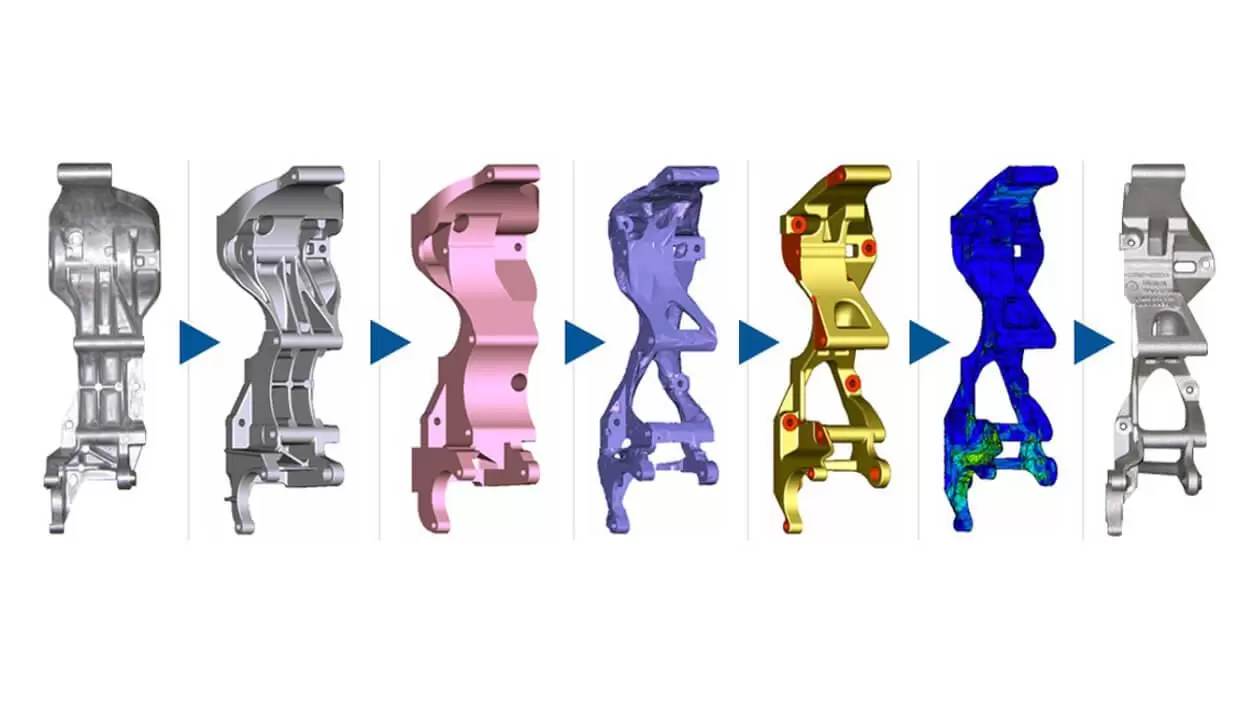
AI helps engineers explore and evaluate multiple design alternatives.
2. Standardize data before introducing AI into R&D
AI needs data to generate valuable results. In an engineering environment, that data goes far beyond text documents.
It may include:
3D Models → Engineering Drawings → BOM → Simulation Results → Technical Specifications → Change History → Data from Previous Projects
The challenge is that this information is often stored across multiple locations: personal computers, shared folders, CAD software, document management systems, or even exchanged through email.
When data is fragmented, duplicated, or associated with unclear versions, AI also has difficulty determining which information should be used.
Companies should therefore consider:
- Where is engineering data currently stored?
- Are consistent naming and classification rules in place?
- Which version is the latest?
- What data can AI access and modify?
- Can changes be traced throughout the product lifecycle?
- Can data from previous projects be reused?
This is also why PLM and product data management platforms are becoming increasingly important as companies introduce AI into product development.
The deeper AI becomes involved in engineering, the more important the quality and consistency of the underlying data become.
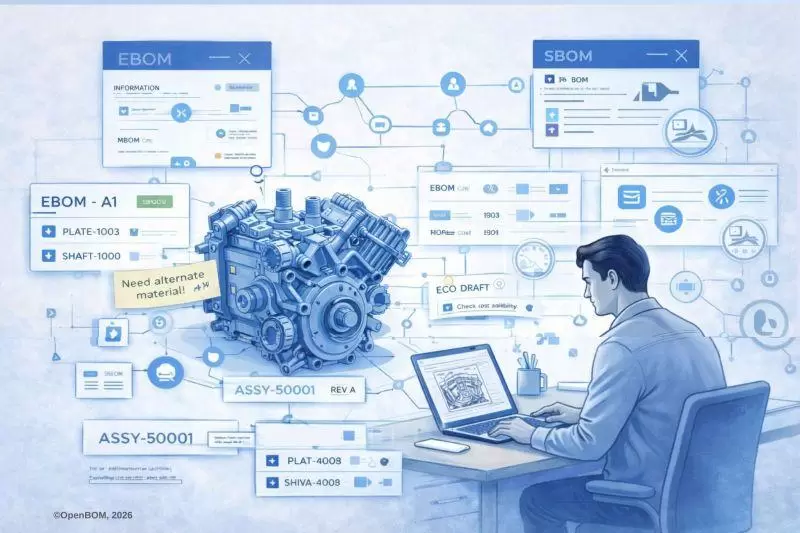
Consistently organized engineering data provides the foundation for AI to deliver value effectively.
3. Connect design, simulation, and data management workflows
Good data alone is not enough if it remains trapped within disconnected processes.
Consider a workflow such as:
Design → Export Data → Simulation → Share Results → Modify Design → Run Simulation Again
If each step relies on a different source of data, engineers still need to perform multiple manual tasks to convert, verify, and update information.
In this situation, adding AI to a single isolated step may not solve the broader workflow problem.
An R&D process that is better prepared for AI should establish a continuous flow of data across:
Design → Simulation → Evaluation → Change → Data Management
For example, 3DEXPERIENCE is designed to connect product development data and activities within a common environment, where solutions such as CATIA, SIMULIA, and ENOVIA can support different stages of the process.
When design, simulation, and product data are clearly connected, AI has more context to support engineers in real-world tasks.
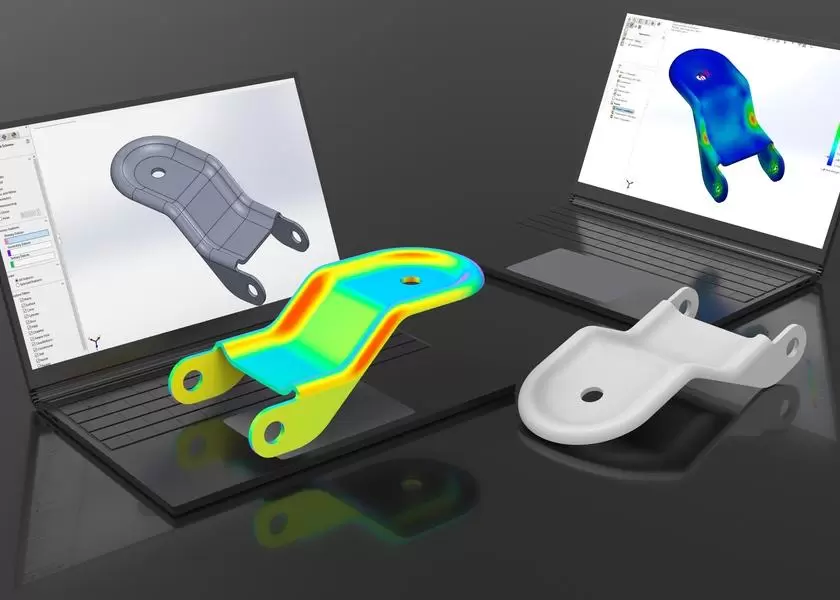
Connecting design and simulation helps shorten product development cycles.
4. Build a technology foundation that gives AI the right context
Not every type of AI is suitable for R&D.
General-purpose AI can support tasks such as search, summarization, and content generation. Engineering problems, however, often require much more context:
- Which design version is being used?
- Which assembly does this component belong to?
- Which components will be affected by this change?
- Which simulation results correspond to the current design?
- Which engineering requirements must be satisfied?
This highlights an important distinction between general-purpose AI and AI operating within an industrial context.
One example of this direction is Dassault Systèmes’ Virtual Companions:
AURA focuses on enterprise knowledge and business context.
LEO focuses on engineering activities, from design to manufacturing.
MARIE focuses on scientific knowledge and advanced research challenges.
What matters is not only AI’s ability to answer questions, but also its growing ability to operate closer to the data, knowledge, and context of real engineering work.
For R&D organizations, this raises an important question:
Does your current environment provide enough data and context for AI to effectively support engineers?

5. Prepare people to make decisions with AI
Even when the data and technology are ready, AI alone will not create a better R&D process.
Engineers need to understand when to use AI, how to evaluate its outputs, and when an AI-generated recommendation should not be accepted.
In engineering, a solution that is “optimal” according to one criterion may not be the best overall solution.
A geometry change may improve performance but increase manufacturing costs. A material with better properties may be more difficult to machine. A lighter design may introduce new requirements related to strength or assembly.
Engineers therefore need to develop capabilities such as:
- Understanding the real problem rather than simply executing a request.
- Identifying design requirements and constraints.
- Evaluating results generated by AI and simulation.
- Understanding the relationship between design, simulation, and manufacturing.
- Making decisions based on engineering data and experience.
AI can help engineers analyze more alternatives in less time, but engineering decisions still require human judgment and responsibility.
Is your company ready to implement AI in R&D?
Before starting an AI project, companies can assess their readiness with five questions:
| Area | Question to consider |
|---|---|
| Use Case | What specific R&D problem will AI help solve? |
| Data | Is engineering data standardized and accessible? |
| Process | Are design, simulation, and data management connected? |
| Technology | Does the current platform provide enough context for AI? |
| People | Can engineers validate and effectively use AI-generated results? |
If one or more answers remain unclear, companies do not necessarily need to postpone AI adoption. Instead of deploying AI across the entire organization immediately, starting with a focused use case, clearly defined data, and measurable outcomes can provide a more practical path forward.
Preparing for AI also means strengthening the R&D foundation
Implementing AI in R&D should not begin with the question, “Which AI tool should we buy?”
A better starting point is to review how the organization manages its data, processes, and engineering knowledge.
When design data is better managed, simulation is connected to the product development process, and engineers can access the right information in the right context, AI has a stronger foundation for delivering practical value.
With platforms such as 3DEXPERIENCE, together with solutions including CATIA, SIMULIA, and ENOVIA, companies can progressively build a more connected product development environment before expanding the use of AI.
👉 Contact New System Vietnam to discuss your current R&D environment and explore a roadmap for building the data, design, and simulation foundation needed for AI adoption.
Frequently Asked Questions About AI in R&D
How can AI be used in R&D?
AI can support knowledge search and reuse, design generation and evaluation, data analysis, simulation-related activities, and the automation of repetitive tasks. Specific capabilities depend on the tools, data, and processes available within the organization.
Should companies standardize their data before implementing AI?
Yes. Fragmented, duplicated, or poorly version-controlled data can limit the value companies gain from AI. Organizations should establish clear approaches to storing, classifying, accessing, and managing versions of engineering data before expanding AI adoption.
Should AI be deployed across the entire R&D organization from the beginning?
Not necessarily. Companies can start with a specific use case that has clearly defined data and measurable KPIs, evaluate the results, and then expand AI to other processes.
Related posts
Can AI Replace Design Engineers? The Future of AI in Engineering
How to Shorten Product Development Time: 5 Critical Factors Companies Often Overlook

Modern Product Development: Why Many Manufacturers Still Face Product Launch Delays
CAM-TOOL V21.1: How to Reduce NC Programming Time and Optimize Toolpaths?