













Understanding CAD in Enterprises: From Design to Data and Manufacturing
In many engineering organizations, CAD is still viewed primarily as a drafting tool used exclusively by the design team. However, as products become more complex and workflows increasingly interconnected, CAD must be recognized as an integrated data platform—supporting design, data management, and manufacturing across the entire process.
In many engineering companies, CAD is still commonly seen as a tool used exclusively by the design department. However, in reality, most project issues do not originate from design concepts themselves, but from how CAD data is created, managed, and shared across departments.
According to studies in the manufacturing industry, 70–80% of a product’s cost is determined at the design stage. This means that even minor errors in CAD data can lead to significant modification costs in later phases.
Therefore, today’s CAD should be viewed as an engineering data platform rather than just a 2D/3D drawing tool.
CAD and Data Management Across the Product Lifecycle
Throughout the product development lifecycle, CAD data is used not only by designers, but also by:
- Simulation and analysis teams
- Manufacturing and machining departments
- Change management and continuous improvement teams
A PLM industry survey shows that engineers spend over 50% of their time searching for, checking, and validating existing data instead of creating new designs. This clearly indicates that CAD data is fragmented and lacks standardization.
To address this challenge, enterprises need to approach CAD through three core value layers.
1. CAD for DESIGN & COLLABORATION
In modern projects, design is rarely an individual task. CAD data must be continuously shared among multiple departments to ensure progress and consistency.
However, when CAD exists as isolated files:
- The latest version is unclear
- Design changes are not fully tracked
- Data is copied and modified without proper control
As a result, project schedules are delayed and technical risks increase.
Modern CAD platforms enable:
- Centralized design data management
- Version and change history tracking
- Multi-user collaboration on a single data source
Integrated digital solutions, such as CATIA running on 3DEXPERIENCE, transform CAD into a central hub connecting design, simulation, and manufacturing.
When design becomes shared data across departments, CAD must be implemented as a platform—not just a standalone drafting tool.

Effective collaboration starts with well-managed and properly shared CAD data.
2. CAD for SIMULATION & ANALYSIS
In modern product development, simulation and engineering analysis (CAE) play an increasingly important role in evaluating and optimizing designs early—before production begins. In this process, CAD data serves as the fundamental input for simulation.
However, in many companies, CAD and CAE are still deployed separately:
- CAD models must be manually modified for analysis
- Design changes are not updated in simulation models in time
- Analysis results are difficult to feed back into design
As a result, simulation becomes fragmented, time-consuming, and less effective in supporting technical decision-making.
MODSIM was introduced to address this challenge. It is an integrated approach that tightly connects CAD and CAE, enabling design and simulation to run in parallel on a unified digital workflow.
MODSIM enables:
- Parallel design and simulation on a single data stream
- Automatic simulation updates when designs change
- Direct feedback of analysis results into the design process
On the 3DEXPERIENCE platform, CATIA and SIMULIA operate in a unified environment, sharing a single data source without model conversion or duplication. As a result, simulation is no longer just a final validation step, but becomes a continuous and natural part of the design process—representing the core value of MODSIM.
When CAD and simulation are connected in a continuous data flow, CAD evolves beyond design support to become the foundation for early-stage engineering decisions.

3. CAD for MANUFACTURING & MACHINING
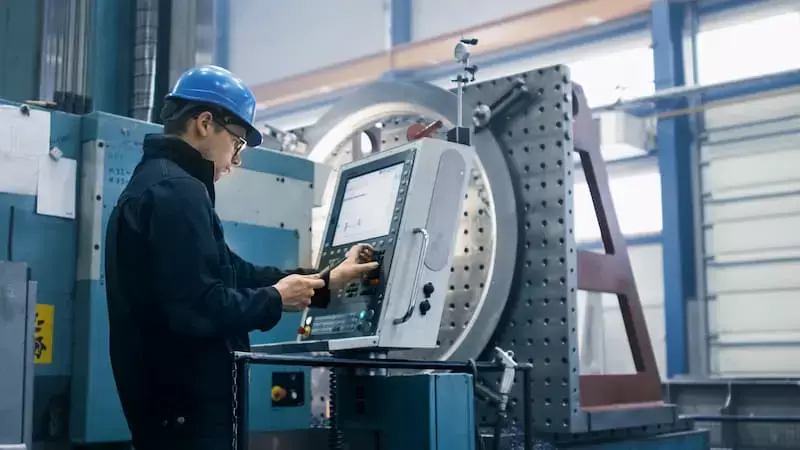
In modern manufacturing environments, CAD data supports not only design but also serves as the direct foundation for machining and production. Seamless integration between design and manufacturing shortens production preparation time and reduces shop-floor risks.
However, when design and machining data are disconnected:
- Design drawings and machining data exist separately
- Manufacturing changes are not fed back into design
- Every modification requires data rebuilding, increasing time and errors
As a result, preparation time increases, costs rise, and continuous improvement becomes difficult.
Modern CAD/CAM platforms enable:
- Direct use of design data for machining programming
- Synchronization between design and machining data
- Rapid design adjustments when machining issues arise
Integrated CAD/CAM solutions, such as CATIA Machining, allow design and manufacturing data to operate on the same platform. When machining issues occur, engineers can modify the design model directly instead of rebuilding data from scratch.
When design and manufacturing are unified on one platform, CAD becomes a seamless bridge between ideas and real products.
Conclusion: CAD Is an Ecosystem, Not Just Software
In modern enterprises, CAD is not merely a tool for creating 3D models—it is a data platform that determines cost, quality, and production schedules.
Approaching CAD as an ecosystem enables enterprises to:
- Reduce technical errors
- Improve collaboration efficiency
- Prepare for future digital transformation
The three core value layers of CAD—Design, Simulation Integration, and Manufacturing Readiness—must be developed in alignment. Only when these layers are properly connected can CAD truly function as the foundation for engineering and manufacturing operations.
Every company faces unique CAD challenges. To enable CAD to truly support design, simulation, and manufacturing in an integrated manner, implementation must begin with a clear understanding of processes, data, and business objectives.
Accurately assessing the current CAD environment is the foundation for building a sustainable and long-term digital roadmap.
👉 Explore NSV’s CAD solutions
👉 Contact NSV to consult with our technical experts
Related posts

AI in R&D: What Should Companies Prepare for Effective Implementation?

Can AI Replace Design Engineers? The Future of AI in Engineering

Why Companies Still Experience Errors After Investing in CAD

How to Shorten Product Development Time: 5 Critical Factors Companies Often Overlook