CAM-TOOL software is a widely used CAM system in the mold and die industry. Let’s explore its three most popular versions: Prime / 3+2 Axis / 5 Axis.
CAM-TOOL software developed by C&G SYSTEMS INC is a widely used CAM system in the mold and die manufacturing industry. It is also an integrated CAD/CAM system with surface modeling capabilities, covering the entire workflow from importing CAD data to generating NC output.
CAM-TOOL offers multiple machining modes, allowing engineers to flexibly prioritize one of the two most critical factors in manufacturing: “machining accuracy” and “machining efficiency,” depending on technical requirements and surface quality expectations. It provides strong support for every stage of mold and die production, from high-precision machining to large-scale part machining.
Below are some of the key features of CAM-TOOL and the differences among several of its notable modules:
1. Core Features of CAM-TOOL (3-Axis)
- Advanced toolpath generation:
CAM-TOOL provides the ability to generate accurate and efficient toolpaths for a wide range of machining operations. It supports multiple machining strategies, including 2D milling, 3D milling, high-speed machining, and multi-axis machining.
- High-quality surface finishing:
The software incorporates sophisticated algorithms for fine surface finishing, enabling molds and dies to achieve high-quality surface finishes across all machined areas. Specialized options allow optimization of machining commands, cutting tool selection, and cutting conditions to meet desired surface quality requirements.
- Simulation and verification:
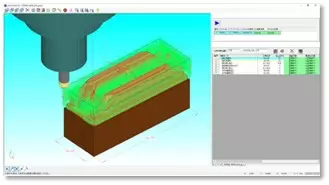
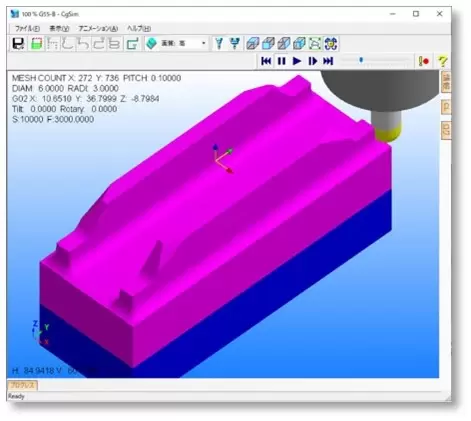
CAM-TOOL offers powerful simulation and verification features that allow CAM engineers to simulate machining processes and validate machining instructions before sending NC data to machine tools. This helps detect and prevent potential collisions, tool errors, and other issues that may occur during actual machining.
- Cutting tool database management (ToolingDB):
CAM-TOOL includes comprehensive cutting tool management capabilities, enabling users to define and manage tool libraries. It supports tool selection, tool life tracking, and optimization of machining operations based on tool availability and performance improvements.
- Strong integration:
CAM-TOOL integrates seamlessly with other software systems and workflows in the manufacturing environment. It enables smooth data exchange with various CAD systems such as CATIA, NX, SolidWorks, and Pro/ENGINEER, as well as manufacturing management software and CNC machines—ensuring a streamlined and efficient production process.
2. CAM-TOOL PRIME Module:
Compared to the standard CAM-TOOL package, the CAM-TOOL PRIME module offers several advantages, along with certain limitations of its own:
CAM-TOOL PRIME is a streamlined module package derived from the core CAM-TOOL system. It does not include the full range of machining strategies available in the standard CAM-TOOL package; instead, it is simplified to meet the most fundamental mold machining requirements.
CAM-TOOL PRIME is commonly used by beginners or manufacturers who want to become familiar with CAM-TOOL before upgrading to more advanced packages. Despite being a simplified version, CAM-TOOL PRIME inherits the proprietary machining engines and calculation algorithms developed by C&G Systems (Japan), enabling the creation of extremely high-precision product surfaces:
- Surface calculation and polygon calculation deliver high accuracy along with excellent machining efficiency.
- Original surface models are preserved exceptionally well, making them ideal for mold programming processes.
- Reliable and optimized toolpaths help save labor and machining time, enabling safer, unattended mold machining.
The CAM-TOOL PRIME module is more accessible to customers due to its lower license cost compared to the standard CAM-TOOL package, positioning it within the mid-range price segment.
CAM-TOOL PRIME+ (Plus) is an enhanced version of CAM-TOOL PRIME, developed specifically for the ASEAN region. It provides additional features and improvements to support faster, more accurate, and safer NC data generation.
3. CAM 3+2 Axis Module
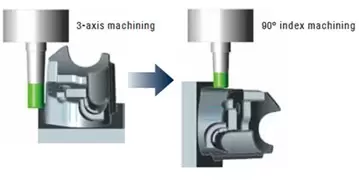
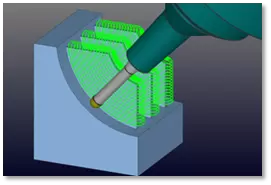
CAM-TOOL 3+2 axis machining provides enhanced flexibility by allowing the cutting tool to access multiple faces of the workpiece without requiring continuous simultaneous 5-axis motion. This is especially useful for machining complex geometries or parts with multiple undercut features.
By utilizing 3+2 axis machining, CAM-TOOL can optimize toolpaths and tool orientations to achieve superior surface quality on machined parts. This is particularly important in industries such as aerospace, automotive, and mold and die manufacturing, where high surface quality is a critical requirement.
CAM-TOOL 3+2 axis includes efficient toolpath generation algorithms that optimize tool movements and minimize unnecessary cutting motions. Advanced optimizations such as machining simulation (animation)—including visualization of undercut areas—and air-cut deletion through multi-directional machining help deliver reliable and highly efficient machining data. This results in reduced machining time and improved production productivity.
Designed with ease of use in mind, CAM-TOOL 3+2 axis does not require extensive programming skills or deep knowledge of simultaneous 5-axis machining. This enables CAM programmers of varying experience levels to quickly learn and effectively use CAM-TOOL.
CAM-TOOL 3+2 axis is compatible with a wide range of modern CNC machines, allowing manufacturers to fully leverage their existing equipment while benefiting from advanced 3+2 axis machining capabilities.
4. CAM 5-Axis Module
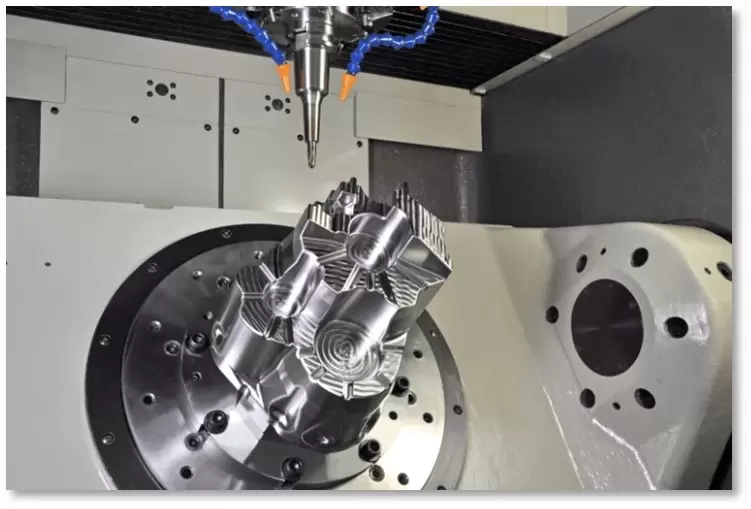
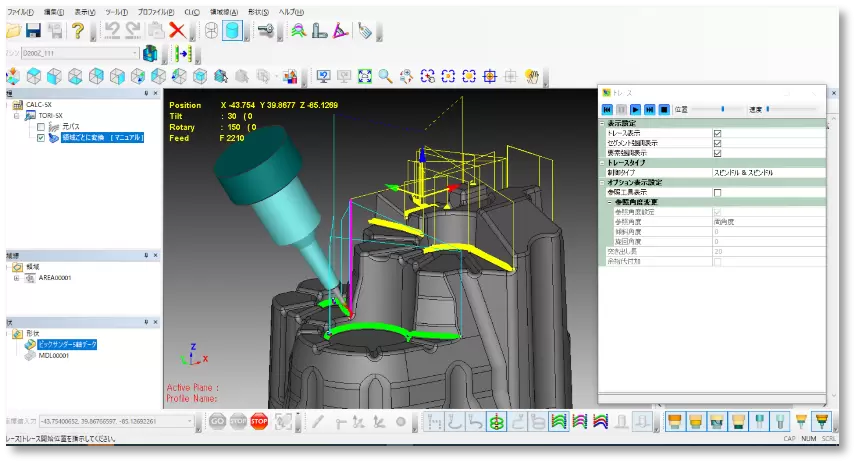
CAM-TOOL 5-axis is designed for simultaneous 5-axis machining on 5-axis CNC machine tools. It allows the cutting tool to move along five primary axes (X, Y, Z, A, and B), enabling the machining of highly complex parts while achieving superior surface quality.
Simultaneous 5-axis machining produces the highest surface quality by smoothly controlling rotary axes with minimal changes in tilt angles. In Simultaneous 5-Axis Machining, 3-axis toolpaths are converted into simultaneous 5-axis toolpaths through a 5-axis conversion function. This mechanism assigns tool vector data without altering the cutter contact point. As a result, it does not require specialized skills or extensive knowledge of simultaneous 5-axis machining—an area that often concerns manufacturers.
Smoothing Control is a standout feature of the CAM-TOOL 5-axis module. It adjusts tilt and rotary axes to ensure the CNC machine spindle moves as smoothly as possible. The function also calculates gradual, smooth spindle tilting before reaching positions where sudden directional changes would otherwise be required. These capabilities help achieve the highest possible surface quality in fine finishing operations.
CAM-TOOL 5-axis is designed to be compatible with a wide range of machine tools. It supports the generation of toolpaths that can be used across machines with different axis configurations. This compatibility provides scheduling flexibility, simplifies post-processing, and allows programs to run on various 5-axis machines with minimal modification.
Conclusion:
Each module/package of the CAM-TOOL software—CAM-TOOL PRIME, CAM-TOOL 3+2 Axis, and CAM-TOOL 5 Axis—has its own distinct strengths and advantages, along with specific limitations and constraints. Customers can carefully consider and choose the solution that best fits their business or manufacturing needs, or contact NSV for further consultation and support in identifying the most suitable solution.