














Understanding Cyber Attacks: How They Happen and How Businesses Can Protect Themselves
In today’s digital era, data has become the most valuable asset of every business. Unfortunately, that also makes organizations a prime target for cybercriminals. A single attack can disrupt operations, expose sensitive information, cause significant financial loss, and severely damage brand reputation.
In today’s digital era, data has become the most valuable asset of every business. Unfortunately, that also makes organizations a prime target for cybercriminals. A single attack can disrupt operations, expose sensitive information, cause significant financial loss, and severely damage brand reputation.
This article will help you understand what a cyber attack is, why attacks are becoming increasingly dangerous, and the most common methods businesses need to be aware of.
👉 If you want to strengthen your security posture now, contact NSV for a tailored cybersecurity solution.

1. What is a Cyber Attack?
A cyber attack is an intentional attempt to infiltrate, interfere with, or destroy an information system to steal data, disrupt operations, or take control of internal systems.
With rapid digital transformation, attacks have become more sophisticated, highly automated, and capable of spreading across multiple platforms — from email and websites to applications, IoT devices, and smart equipment. In other words, any internet-connected endpoint can become an entry point for attackers if it’s not properly protected.
2. Common Types of Cyber Attacks
2.1 Malware
Malware includes viruses, trojans, worms, and backdoors. These are designed to infiltrate systems, spread silently, and damage or steal critical information. Many malware variants also create “backdoors” that allow attackers to regain access anytime they want.
How to prevent:
- Keep operating systems and applications updated
- Use EDR/Antivirus with behavioral detection
- Apply least-privilege access control
- Back up data regularly
2.2 Ransomware
Ransomware is one of the most severe threats today because it can encrypt entire systems, bringing business operations to an immediate halt. Attackers then demand ransom — but even if paid, data is not guaranteed to be restored.
How to prevent:
- Maintain offline/immutable backups
- Restrict data access and segment systems
- Avoid opening files/emails from unknown sources
- Train employees to recognize suspicious signs

2.3 Phishing / Spear-Phishing / Business Email Compromise (BEC)
These attacks target human behavior. Attackers impersonate trusted sources through fake emails or websites to steal login credentials or trick accounting staff into transferring funds. Spear-phishing attacks are highly personalized, making them extremely difficult to detect.
How to prevent:
- Enable MFA on important accounts
- Implement DMARC/SPF/DKIM to block spoofed emails
- Require verification for all financial requests
- Train employees to detect suspicious messages
2.4 Man-in-the-Middle (MITM)
In MITM attacks, hackers secretly intercept communication between a user and a server to steal credentials or manipulate data. Public Wi-Fi networks are especially vulnerable.
How to prevent:
- Use services that support HTTPS
- Use VPN for internal access
- Avoid logging into critical systems on public Wi-Fi
2.5 Distributed Denial of Service (DDoS)
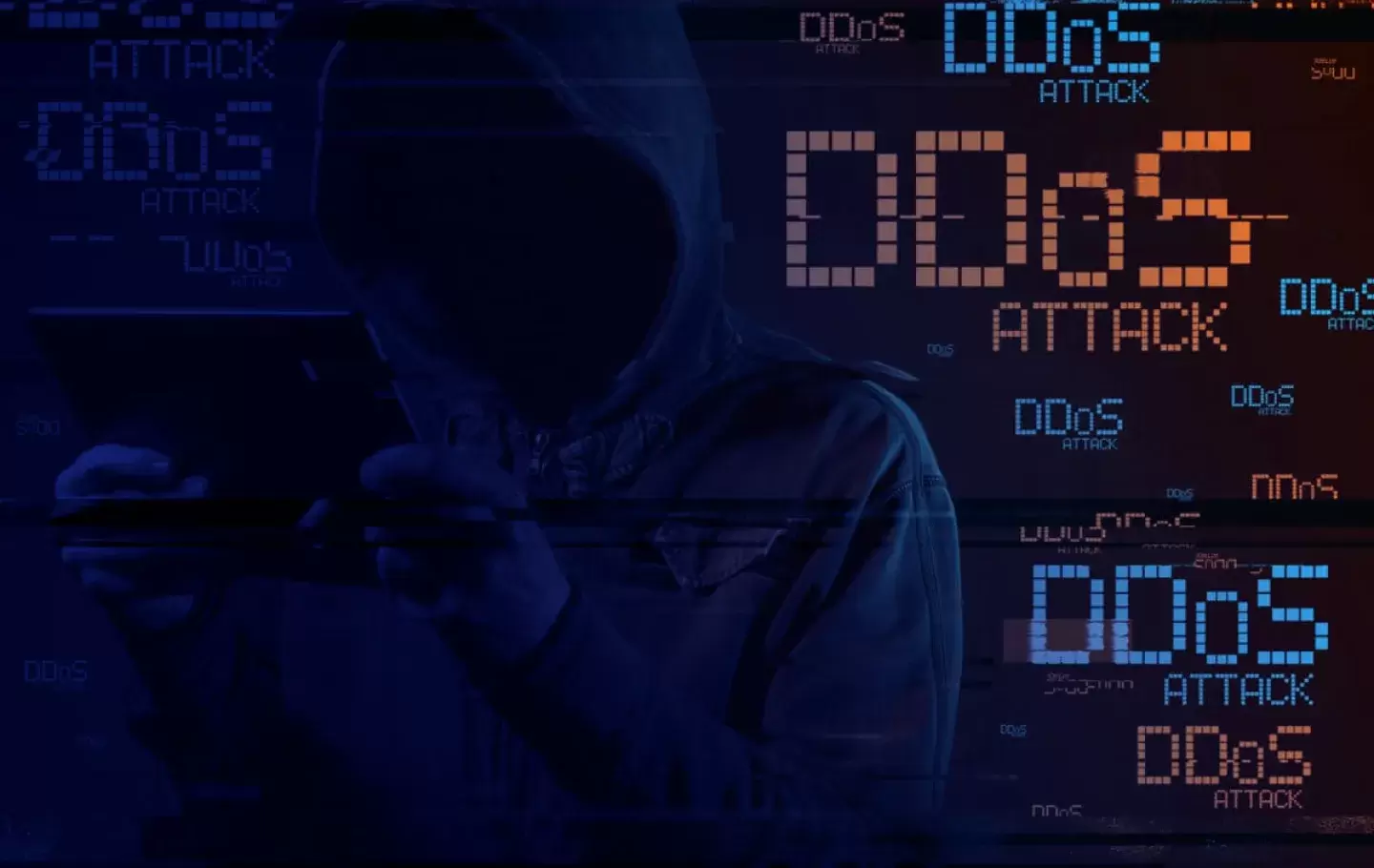
DDoS attacks overwhelm systems with massive fake traffic, making websites or APIs unavailable. They can last from hours to days, causing significant losses for sectors like retail, finance, and logistics.
How to prevent:
- Use CDN to distribute traffic
- Deploy DDoS-protection firewalls and rate limiting
- Monitor network traffic in real time
3. How a Cyber Attack Actually Happens
Cyber attacks rarely occur instantly. Attackers follow a structured sequence:
Reconnaissance → Exploitation → Installation → Command & Control → Action on Objectives
Blocking just one stage can stop the entire attack.
3.1 Reconnaissance
Goal: Gather information to identify vulnerabilities.
Attackers collect technical, human, and leaked data to find the best entry point.
They search for:
- Technical info: Public IPs, domains/subdomains, open ports, software versions, DNS configuration, mail servers, VPN services…
- Human info: Employee emails, roles, meeting schedules, device habits, tendency to click links
- Leaked data: Exposed passwords, indexed internal documents, data from partners/vendors
3.2 Exploitation
Goal: Break into the system using technical flaws or human weaknesses.
Common techniques:
- Technical exploitation: RCE, SQL Injection, XSS, Authentication Bypass, Directory Traversal
- Social engineering: Phishing emails, fake login pages, CEO fraud/BEC
- Password attacks: Brute force, credential stuffing
3.3 Installation
Goal: Establish persistent access.
Attackers install components such as:
- Backdoors
- Trojans disguised as legitimate software
- Web shells (e.g., China Chopper)
- Rootkits to hide activity
- Remote control agents (e.g., Cobalt Strike Beacon)
3.4 Command & Control (C2)
Goal: Allow attackers to remotely control the compromised system.
Once connected to the C2 server, attackers can:
- Execute commands
- Install additional tools
- Move laterally across the network
- Collect data from multiple machines
3.5 Action on Objectives
Goal: Execute the ultimate purpose — data theft, extortion, or destruction.
Common actions include:
- Stealing data: Compressing, encrypting, and exfiltrating it to avoid detection
- Ransomware: Encrypting servers, disabling antivirus, deleting backups
- System destruction: Deleting logs or databases to cause prolonged downtime
- Using victim systems: Launching attacks against partners or other targets
4. What Should Businesses Do to Prevent Cyber Attacks?
As attacks become more advanced, businesses can no longer rely on “reactive” defense. A strong cybersecurity strategy must be proactive, multi-layered, and tightly integrated with daily operations.
Here are five essential groups of defenses every organization should implement — even without a dedicated security team.
4.1 Regular Software Updates and Patch Management
Many major breaches originate from vulnerabilities that already had patches available. Attackers constantly scan the internet for unpatched systems.
Businesses should:
- Establish routine patching for OS, internal apps, VPNs, firewalls, servers, and cloud services
- Enable automatic updates where possible
- Monitor critical CVEs related to their technologies
Benefit: Significantly reduces exposure to remote exploitation.
4.2 Multi-Layered Security (Defense in Depth)
No single tool can protect everything. Multiple layers help detect, block, and contain threats.
Recommended layers:
- Firewall & IPS
- Antivirus/EDR
- Multi-factor authentication (MFA)
- Data encryption in transit and at rest
- Zero Trust access control
Even if one layer fails, others continue to protect the system.
4.3 Employee Awareness Training
Human error remains the weakest link. Nearly 80% of successful attacks start with a phishing email.
Businesses should:
- Provide regular cybersecurity training
- Teach employees how to check URLs, email senders, and attachments
- Conduct phishing simulations
- Create a reporting process for suspicious emails
One well-trained employee can stop an entire attack.

4.4 Regular Backups and Recovery Planning
Ransomware can encrypt systems in minutes. Backups are the last line of defense.
Follow the 3-2-1 rule:
- 3 copies of data
- 2 types of storage
- 1 offline or immutable copy
Regular restore tests ensure backups remain usable.
4.5 Regular Security Assessments (PenTest / Security Audit)
You cannot protect vulnerabilities you don’t know exist.
Security assessments help:
- Identify real vulnerabilities
- Evaluate web/app, server, and cloud security
- Assess operational risks
- Prioritize remediation
PenTests should be conducted at least once or twice a year.
Conclusion
Cyber attacks are becoming increasingly sophisticated and unpredictable, especially as businesses rely more heavily on digital systems. Understanding common attack methods and preparing proactive defenses is essential to protect data, prevent downtime, and maintain customer trust.
NSV is committed to helping Vietnamese businesses build a strong cybersecurity foundation — from security assessments and penetration testing to threat monitoring and comprehensive protection solutions. If your organization wants to strengthen security, reduce risk, and stay ahead of cyber threats, contact NSV for expert consultation today.
Related posts

How to Shorten Product Development Time: 5 Critical Factors Companies Often Overlook
From fragmented devices to an integrated IT system: What are businesses missing?
Comparing Enterprise Information Security Solutions: Which One Is the Right Choice?

NSV: Partnering to Protect Businesses Against Ransomware in 2025