


















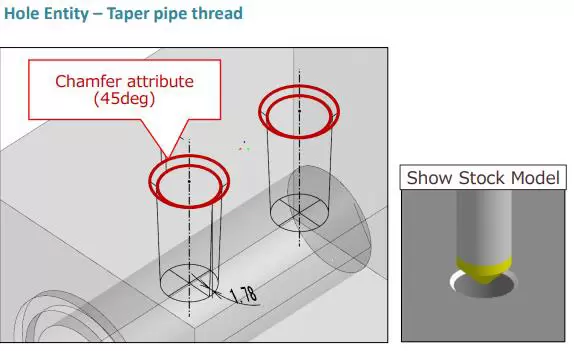
A new “Tip/Shoulder” setting has been added to the “Hole Type” option in Helical Tapping.
Optimizing CAM Operations with CAM-TOOL Version V19.1
Updates on New Features in CAM-TOOL Version V19.1
Table of Contents
1. Display Tool Contact Point CL
When machining adjacent areas using tools of different sizes and shapes, displaying the tool center or tool tip makes it difficult to accurately check the remaining material.
With CAM-TOOL V19.1, the tool path can now be displayed at the tool contact point, allowing users to clearly verify whether any uncut material remains.

The Display Tool Contact Point feature supports checking unmachined areas before running cutting animations, helping improve the efficiency of tool path verification and optimize the time required to review cutting ranges.
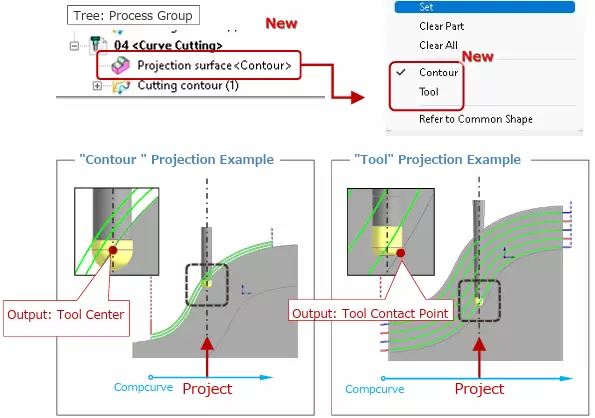
2. Curve Cutting (Projection Surface – Contour and Tool)
It is now possible to project 3D curves onto specific machining surfaces to generate cutting paths.
This significantly reduces CAM programming time when creating tool paths on complex surfaces such as grooves and channel features.
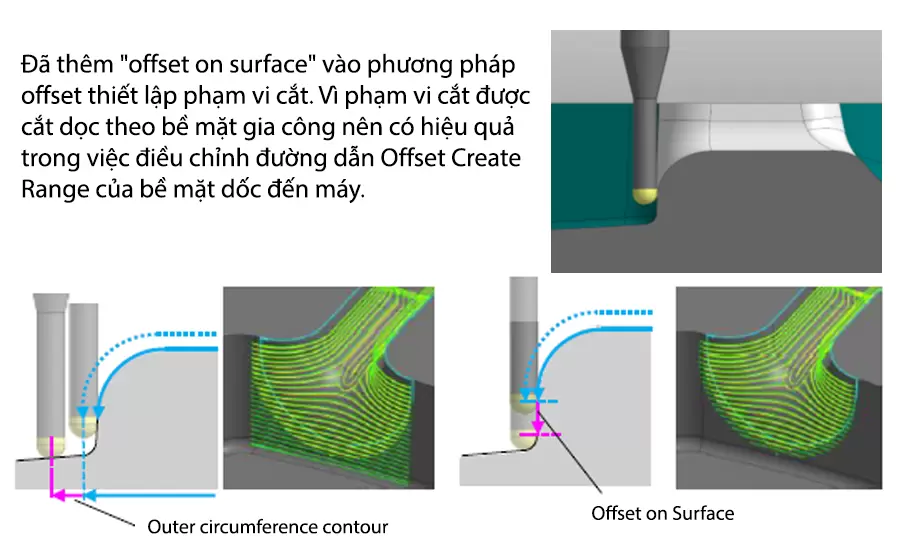
3. Toolpath Boundary - Add Offset on surface
4. Tool Shapes Fillet (Fillet Tool Shape)
The Fillet tool shape, used to generate smoother tool paths, can now be created as polygonal entities.
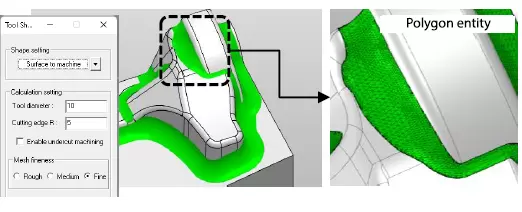
The generated shapes can be assigned as machining surfaces, allowing them to be reused across multiple configurations. This significantly reduces the time required to create Tool Shape Fillets for each CAM calculation process.
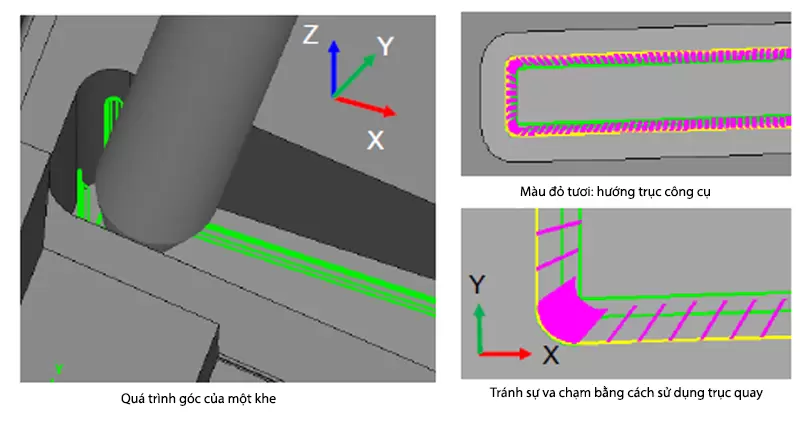
5. Automatic Improvement of 5-Axis Conversion
In situations where tool interference is likely to occur in narrow machining areas as shown below, the rotary axis is also utilized to increase material removal efficiency.
The improved success rate of automatic 5-axis conversion results in fewer 5-axis conversion attempts and shorter data generation time.
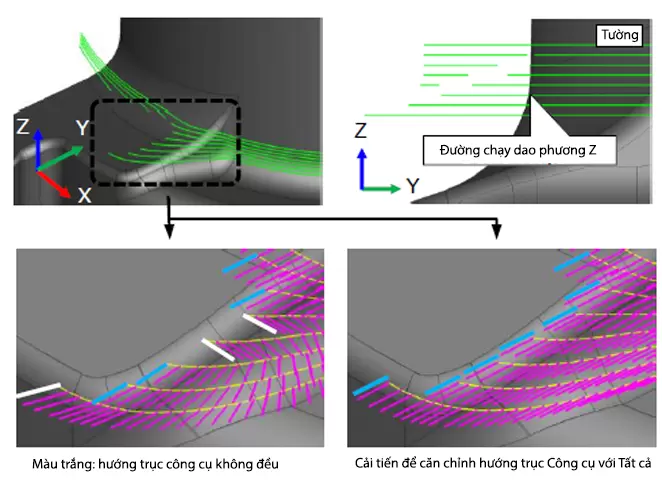
- When a Z-Level toolpath is calculated using the Division Angle
Setting the tool axis direction may sometimes become misaligned when the toolpath is interrupted. Aligning the tool axis direction for each Z-Level toolpath improves the machined surface quality.
6. Improved Surface Filling Operation
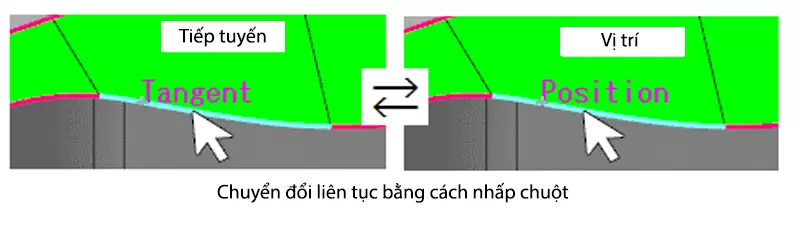
Continuous Tangent and Position boundary edges can now be switched simply by clicking directly on the geometry.
This intuitive entity selection reduces CAD operation time, especially when working with models that contain a large number of entities.
7. Improved Accuracy for Taper Tools
When using taper tools to machine sloped geometries such as deep ribs, some toolpaths were previously not generated.
This improvement enhances the accuracy of taper tool processing, ensuring that the required toolpaths are correctly output for complex inclined features.

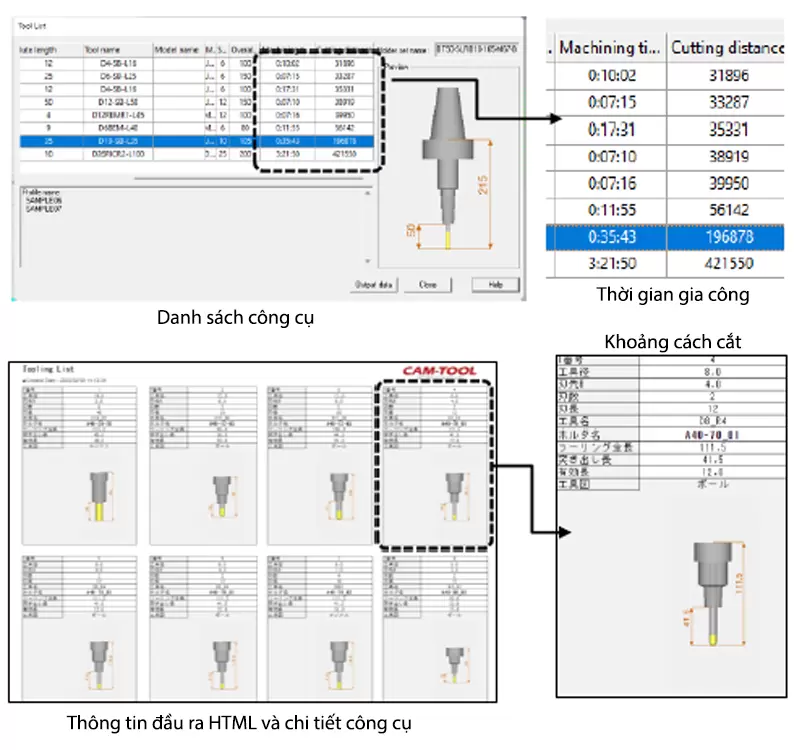
8. Export Tool List
To display the list of tools used in the machining process list, the tool list can now be exported to an external file in HTML format.
This feature helps share information between CAM operators and machine operators, enabling smoother coordination and more efficient collaboration.
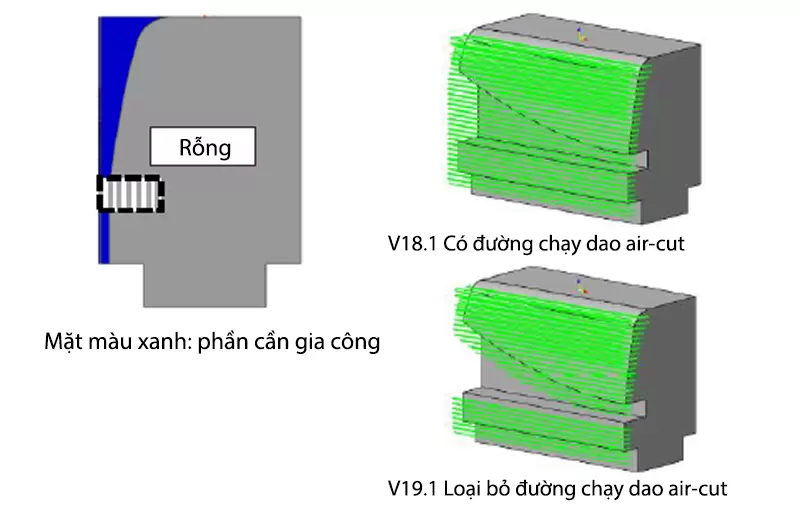
9. Air-Cut Removal Optimization: Support for Hollow Stock Models
The optimized calculation can now recognize hollow stock shapes and eliminate air-cut toolpaths in hollow areas, helping to significantly reduce machining time.
10. Helical Tapping: Improvements to “Chamfer Length” and “Hole” Settings
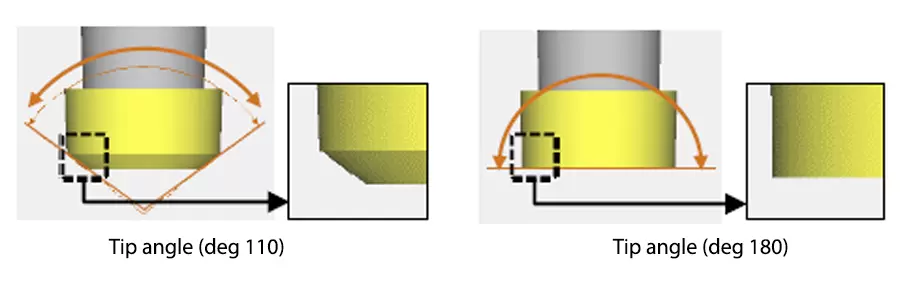
The tool tip angle can now be set to 180°, and the chamfer length of the thread milling tool can be defined separately for different hole types.
Related posts

AI in R&D: What Should Companies Prepare for Effective Implementation?
What should companies prepare before implementing AI in R&D? Explore five key areas — data...

Can AI Replace Design Engineers? The Future of AI in Engineering
Can AI replace design engineers? Discover how AI is changing engineering, the role of AURA...

How to Shorten Product Development Time: 5 Critical Factors Companies Often Overlook
Want to shorten product development time but don't know where to begin? Discover five crit...

Modern Product Development: Why Many Manufacturers Still Face Product Launch Delays
In today’s manufacturing environment, product development is no longer an isolated task ha...
CAM-TOOL V21.1: How to Reduce NC Programming Time and Optimize Toolpaths?
CAM-TOOL V21.1 is a CAM software release focused on improving NC programming efficiency an...